About.
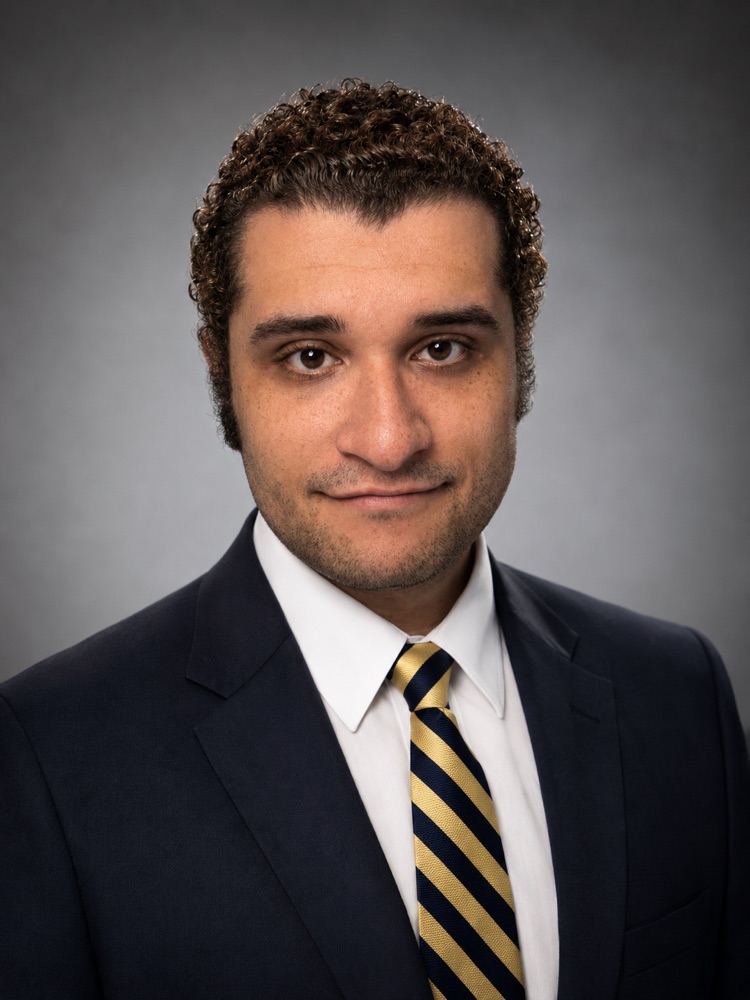
I've spent most of my professional life trying to live at the seam between two things people insist on keeping separate.
I figured this out late. For most of college I assumed I'd be a lawyer, and I studied English because I liked sentences, and I picked up a minor in Computer Science because the classes were interesting and the grading was fair. I took a graphics course called Recreational Graphics that I still think about, and a few graduate courses at the Simon School of Business that I had no business being in. I worked in the University of Rochester's admissions office for the year after I graduated, which is where I learned more about how systems decide who's allowed inside them than I learned in any seminar before or since. Reading nine hundred applications in a single cycle will do that to you. You start to see the patterns the system rewards, the patterns it punishes, and the patterns it doesn't even know it's doing.
I went to Suffolk Law following the George Floyd protests, determined to make the world a better place with my profession in some way I hadn't yet figured out. I wrote my thesis on international money laundering because the way money moves through the seams of national jurisdictions seemed like a more interesting puzzle than any single crime did. Somewhere in the second year I found the clinical Legal Innovation and Technology program, which is the closest thing American legal education has to an apprenticeship in building things. When I saw what legal tech could do for access, especially for the people who currently can't afford a lawyer, that's when I pivoted. For three years I worked inside that program: writing code, building tools, representing clients in guardianship petitions, and learning that the practice of law is much more about workflow and procedure than law school admits. The thing I'm proudest of from that stretch is a Late Docketing Statement form I built that the Massachusetts Appeals Court ended up adopting. Not because it was technically impressive (it wasn't) but because it was the first time I watched something I made actually change how a system worked. The court used it. The clerks used it. Lawyers I'd never meet used it. That experience is, more than anything else, the reason I do what I do now.
Out of law school I went to Thomson Reuters as a Solutions Engineer on the team building and shipping CoCounsel, which is the AI tool most US legal teams now use in some capacity. For about a year and a half I delivered implementations into Am Law 100 firms, Fortune 500 legal departments, and federal agencies. The work I'm proudest of from that stretch is a playbook-driven NDA review pipeline I designed for a Fortune 500 company and the Thomson Reuters General Counsel Office. It was the first project where I watched a tool I'd built compress a week of attorney work into an afternoon. The performance numbers were good. The harder, more interesting question was what to make of the performance numbers, which I'm still thinking about. Most of the essay I just published on AI is me thinking about it out loud.
From there I moved into research, first as an Associate Scientist and then as a Senior Scientist in Machine Learning and Applied Research on the forward deployed engineering team. That's where I got closest to how these systems actually work. I stress tested models against each other and ran gap analyses on where they fell short. I worked with large-scale discovery data and did the data science that came after it. When something broke, I worked directly in the product's codebase to find out why. I led a team of four engineers, and tools we built are in production today at Fortune 500 companies. Most of what I know about how AI fails in legal work, I learned there.
In April I was promoted into the Advisory Tier, which is a fancy way of saying I spend most of my time working with attorneys, law firm staff, and government professionals on how to actually use these tools rather than just having bought them. The work has put me in a strange position: I sit inside the change I'm writing about, and most of the decisions I help make are the kind a person should be careful about. I try to be.
This fall I also started teaching as an adjunct at Nazareth University: one evening course, Spreadsheet Applications, in the School of Business and Leadership. On paper it's an Excel class. I built it around the two things my day job has taught me matter more than any function in the ribbon. The first is working out what someone is actually asking before you build anything, because real requests almost never arrive as a problem statement. The second is that spreadsheets fail silently. A wrong formula looks exactly like a right one, and decisions get made on top of it anyway. Students spend the whole semester with one fictional client, a coffee shop that grows into a regional business, so the file they structure in September is the one that has to hold up in December. They can use AI on any of it, as long as they keep a log of what it got wrong.
On the side I've been building Simon, an autonomous trading system that exists mostly because I wanted to find out whether I could build something that reports its real performance instead of the cherry-picked version. It separates two problems most trading systems collapse into one: predicting what's going to happen, and deciding what to do about it. The system tracks how often it's wrong, how it's wrong, and learns from the gap. Most of what I've learned from Simon has been about how hard honest performance reporting turns out to be, which is a lesson that's applied to nearly everything else I do.
I also co-founded and run The Olive Branch Review, a writing platform for people who want to write seriously and be read by other people who care. I built the technical stack and I do most of the editorial work. The whole project exists because most places writers can post online now are designed to be read by algorithms, and I wanted to make somewhere designed to be read by people. It's small and slow and exactly the kind of project the open internet was supposed to make possible.
I live in Rochester, which I'd defend against most takes about it. My wife and our two dogs are here. So is a horror movie group I catch new releases with. I read more than I should and write more than I publish. Most of what I love is built on craft of some kind: novels that know exactly what kind of reader they're trapping, horror films that earn their scares from character rather than cuts, albums that don't waste a second. I am, as a result, very hard to please and very easy to fall in love with something new.
The site is an attempt to give a glimpse into a few of those worlds, and a place to keep some of what I'm learning along the way. If any of it resonates, I'd love to hear from you.